




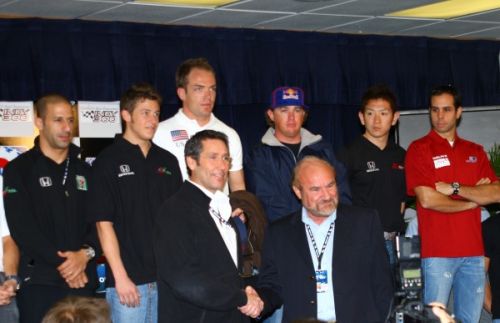
 The proposed 'merger' essentially amounted to the immediate closure of the Champ Car World Series, with all willing teams offered free cars and other equipment to make the switch. A total of six teams transitioned. In addition to the Champ Car teams, the IRL also acquired the races in Long Beach —where Champ Car was set to hold its final race in 2008— and Edmonton, while the Surfers Paradise race would be used as a one-off, non-championship event.
With the end of the 'open-wheel war', the IndyCar calendar underwent rapid changes. The series began to increasingly align with the direction Champ Car had taken years prior: replacing more oval races with the far more popular permanent road and street circuits. While there were still eleven ovals on the 2008 calendar, this number had decreased by four to seven by 2011.
The 'open-wheel war' would ultimately cost Indy Racing League founder Tony George his position. Partly as a result of the Hulman-George family's extravagant spending, George was dismissed as CEO of the Indianapolis Motor Speedway in the summer of 2009. In early 2010, George was also replaced as CEO of the Indy Racing League by Randy Bernard, the former CEO of Professional Bull Riders.
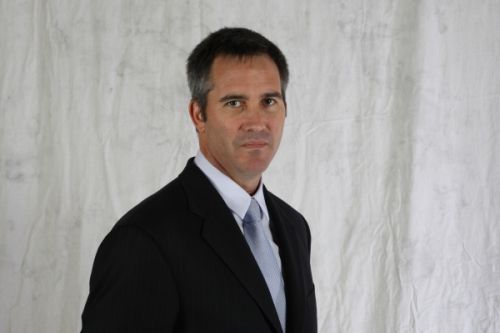 As an outsider to the 'open-wheel war', Bernard was ideally suited for the vacant role. Shortly before his appointment, IndyCar secured IZOD as the title sponsor for the racing series, after which Bernard truly unified the series by merging the statistics of the Champ Car and IRL sides, while definitively retiring the IRL name and making INDYCAR the official name of the governing body.
A subsequent step was taken in 2012 with the introduction of a new car and the resurgence of competition among engine manufacturers, as Chevrolet and Lotus joined Honda. Initially, it was planned for engine manufacturers to begin developing aero kits for the new car from 2013, but this plan was delayed by two years.
Following a successful 2012 for Honda and Chevrolet with their then-new turbo engines, Lotus was unable to produce a competitive engine and withdrew from IndyCar after a single season. No new engine supplier could be found to replace Lotus, so from 2013 onward, the competition would be solely between Honda and Chevrolet.
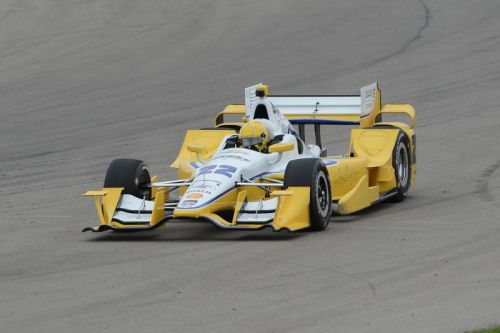 Starting in 2015, Honda and Chevrolet were permitted to develop their own aero kits for the DW12 chassis, named after Dan Wheldon, which had been used as a standard kit by every team from 2012 to 2014. Although the aero kits resulted in numerous lap records being broken and provided plenty of on-track action across various circuit types, they also faced significant criticism for their appearance and increased spendings, with negative feedback being more prevalent.
From 2018 onwards, IndyCar adopted a more retro design, albeit with modern enhancements. The new car was still based on the DW12 from six years prior, but the removal of the airbox and rear bumpers gave the new car a closer resemblance to the cars that competed in the CART World Series until the end of the previous century.
Besides the significant visual changes, the new car also introduced a different style of competition, as this universal aero kit featured significantly less downforce. From this season onward, the best drivers were truly separated from the pack.